

Compressed Air Quality Trend 2026: Why Penang Manufacturers Are Upgrading to Better Filtration and Drying
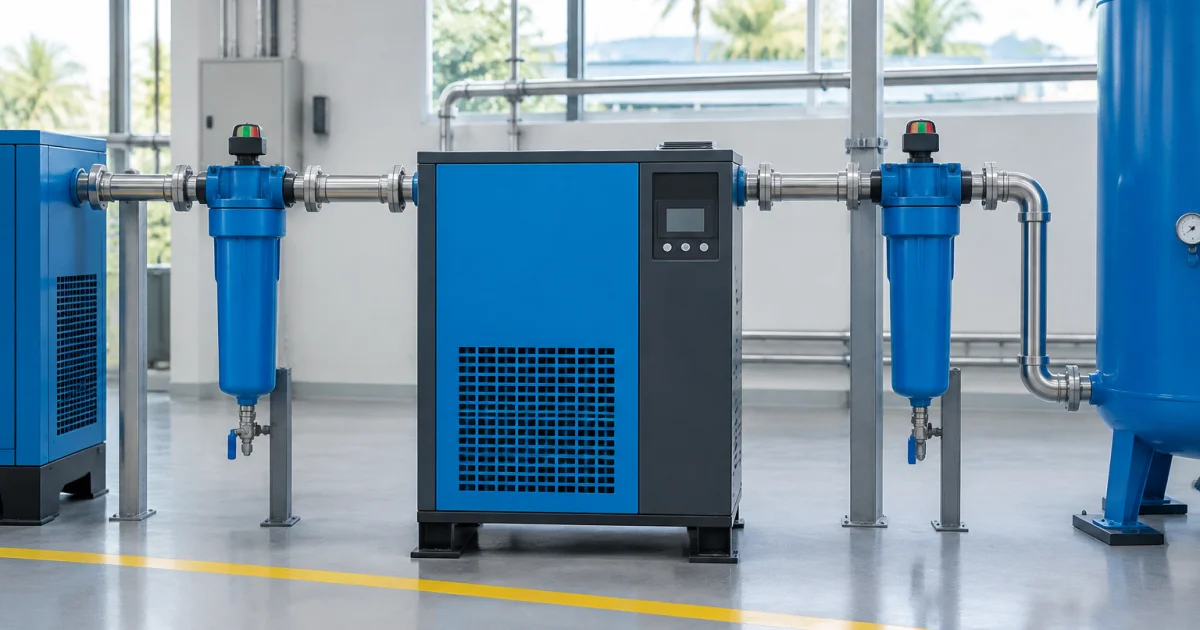
Across Penang’s manufacturing zones, compressed air quality is becoming a practical priority for production, QA, and maintenance teams. The goal isn’t “perfect” air—it’s reducing common, hidden causes of defects, rework, and unplanned stops: moisture, oil carryover, and particulates moving through the air line.
As a result, 2026 budgeting is shifting toward system upgrades (filters, dryers, drains, condensate handling) alongside the compressor. When benchmarking vendors, an Air Dryers Supplier Penang is increasingly assessed on system-level guidance—how to protect critical processes, not just supply a dryer.
This article explains what’s driving upgrades in Penang, what better filtration and drying means in daily operations, and how to specify the right setup without overcomplicating the system.
Why compressed air quality is getting more attention in Penang
Compressed air powers cylinders, packaging machines, tools, instrumentation, blow-off, spraying, and more. When air is contaminated, it rarely causes one obvious failure; it shows up as recurring reliability and quality issues: sticking valves, corrosion, inconsistent tool performance, paint defects, fogged components, or rejects linked to contamination.
Three pressures are driving tighter control in Penang plants:
- More sensitive processes: Higher automation and tighter tolerances make small contamination events more costly downstream.
- Downtime cost visibility: Maintenance teams are expected to prevent issues, not only respond to breakdowns.
- Audit and internal standards: Many factories are standardising utilities as part of reliability and quality programmes.
Not every facility needs the same air class. The practical shift is mapping which processes need protection, then upgrading drying and filtration where it reduces risk the most.
The real culprits: moisture, oil carryover, and particulates
Most compressed air problems trace back to water, oil, and solids—each behaving differently in the system and requiring different control methods.
Moisture: corrosion, bacteria risk, instrument problems
Ambient air contains water vapour. After compression, moisture condenses as air cools in aftercoolers, receivers, and piping. In Malaysia’s humidity, the condensate volume can be significant—especially with high load, inadequate cooling, or poor drainage.
Moisture commonly causes:
- Corrosion in pipes and storage tanks
- Washout of lubricants in tools and cylinders
- Sticking solenoids and instrument air problems
- Water spots or defects in blow-off, cleaning, and packaging
Oil: aerosols, vapour, and “mystery film” on products
Depending on compressor type, condition, and separator performance, oil can enter the air stream as aerosol droplets, vapour, or a thin film that builds up and releases intermittently—creating “random” contamination events.
Oil contamination can drive surface defects, sensor fouling, rapid filter saturation, and premature wear of downstream components. If you’re comparing approaches for sensitive areas, see: Oil Free Air Compressors: Clean And Efficient Solutions For Penang Industries.
Particulates: rust, dust, and desiccant fines
Solids typically come from intake dust, internal wear debris, and rust scale from wet piping. With desiccant dryers, desiccant dust can appear downstream if filtration is inadequate. Particulates contribute to valve faults, seal wear, and blocked orifices.
What “better filtration and drying” looks like in practice
Air treatment works best as a sequence, not isolated purchases. A typical train combines cooling/separation, staged filtration, drying, and condensate management. The right configuration depends on required dew point, oil/odour tolerance, and the sensitivity of end-use points.
Step 1: Start with separation and drainage fundamentals
Before investing in new dryers or higher-grade filters, confirm the basics are stable:
- Aftercooler and separator performance: Poor cooling pushes excess water downstream, overloading the dryer and reducing stability.
- Receiver and line drains: Failed drains allow water to accumulate and release as slugs that overwhelm filters and disrupt production.
- Pipe layout and slope: Long flat runs encourage pooling and rust; poorly located take-offs can pull condensate into branches.
Many “mystery moisture” complaints improve significantly once separation and drains are corrected.
Step 2: Use filtration in stages (not one “super filter”)
Staged filtration is typically more reliable and cost-effective: a pre-filter protects the dryer and removes bulk contamination; an after-filter “polishes” air quality and protects critical points. This also helps manage pressure drop and extend element life.
During procurement, plants often look for a Compressed Air Filter Penang option that matches the correct grade: particulate filtration, coalescing filtration for oil aerosols, and activated carbon when oil vapour/odour control is required. Specify performance and maintenance approach based on real conditions—not only pipe size.
For product comparisons, review the Air Care Filter and confirm element grades align with your compressor type and operating profile.
Step 3: Match the dryer type to your dew point and operating pattern
Dryers are not interchangeable. Selection should start with the required pressure dew point at the point of use and how variable the system demand is.
- Refrigerated dryers suit general manufacturing where the goal is preventing condensation in normal indoor environments, with simpler operation and maintenance.
- Desiccant dryers suit applications requiring very low dew points (for example, certain instrument air needs or cold-line exposure). They require careful filtration and attention to purge/energy trade-offs.
In many 2026 upgrade discussions, the driver for a Compressed Air Dryer Penang solution is not only a lower dew point, but more consistent air quality under load swings across shifts.
Step 4: Don’t ignore condensate handling (oil-water separation)
Better separation and drying means more captured condensate, which may contain oil and must be handled responsibly. Many facilities include oil-water separators in the same project to keep utility areas clean and avoid disposal problems.
In Penang, BEKO oil-water separator systems are often specified alongside compressors, filters, and dryers so air quality improvements don’t create a condensate management headache.
How Penang manufacturers are approaching upgrades in 2026
The most effective projects follow a risk-based approach: identify where contamination causes the highest cost, then design protection for those zones. Three patterns are common in Penang factories:
1) Protecting critical points-of-use (not only the compressor room)
Central treatment helps, but it doesn’t guarantee clean air at every machine—especially with long distribution lines, ageing pipework, or intermittent water release. Many plants add point-of-use filters and local regulation at high-impact equipment such as packaging machines, sensitive pneumatic controls, paint/coating areas, labs, and measurement stations.
2) Treating compressed air as a reliability project
Instead of reacting to incidents, teams schedule routine checks: pressure drop reviews, filter element change planning, drain inspections, and dryer performance verification. This reduces “random” stoppages and supports preventive maintenance goals.
When building a business case, tie air quality upgrades to measurable outcomes: fewer valve replacements, fewer stuck cylinders, reduced tool maintenance, fewer contamination-related rejects, and more consistent performance shift-to-shift.
3) Choosing suppliers based on system support, not only equipment
Many disappointments come from incorrect sizing, mismatched filter grades, weak drain strategy, or poor commissioning. Conditions also change over time—load profiles, ambient temperature, piping extensions—so follow-through matters.
That’s why teams evaluating an Air Dryers Supplier Penang often prioritise technical consultation, service responsiveness, and the ability to supply and support a complete treatment train (dryer + filters + condensate management) that works together.
A practical checklist for specifying your filtration and drying upgrade
Use this checklist to keep discussions with maintenance, production, QA, and suppliers focused on requirements and to avoid overbuying.
Define your “air users” and their sensitivity
- Which lines use compressed air directly on product surfaces?
- Which machines frequently fail due to sticking valves, corrosion, or contamination?
- Are paint, coating, spraying, cleaning, or packaging processes sensitive to oil/water?
- Do labs, medical, or R&D areas require tighter control?
Confirm operating reality (not nameplate assumptions)
- Operating hours per day and days per week
- Typical vs peak demand (steady vs highly variable)
- Compressor type/condition (separator performance, oil carryover risk)
- Ambient conditions and compressor room ventilation
Specify target performance in operational language
- Where must condensation never occur (zones, pipe runs, far-end machines)?
- What level of oil contamination is acceptable for your process?
- What pressure drop can you tolerate before tools or machines suffer?
- What maintenance capacity exists for element changes and inspections?
Plan maintenance from day one
Even correctly selected equipment underperforms if maintenance is unclear. Align early on:
- Filter element strategy (interval planning and differential pressure checks)
- Drain inspection and cleaning schedule
- Dryer verification (temperature/dew point checks where applicable)
- Spare parts availability and service response expectations
Have a contingency for downtime-sensitive operations
If you cannot stop air supply during upgrades or repairs, plan temporary air support in parallel. This guide may help: Air Compressor Rental Penang: A Solution For Industrial Air Compressor Needs.
Conclusion: cleaner compressed air is becoming a standard utility expectation
Penang manufacturers upgrading filtration and drying in 2026 are responding to real operating conditions: high humidity, increasing process sensitivity, and the high cost of unpredictable stoppages. Strong projects stabilise air quality where it matters most by combining effective separation and drains, staged filtration, correctly selected dryers, and responsible condensate handling.
When evaluating options, treat compressed air quality as a system upgrade—not a single purchase. A capable supplier should help define requirements, select the right filter grades and dryer type, commission correctly, and support performance as operating conditions change.
Frequently Asked Questions
How do I choose between a refrigerated dryer and a desiccant dryer for my plant?
Choose based on the dew point you need at the point of use and how your system operates. Refrigerated dryers are commonly used for general factory air to prevent condensation in typical indoor conditions. Desiccant dryers are used when you need much drier air and must avoid moisture even in colder lines or sensitive instrument applications. Your supplier should also check load variability, aftercooling, and filtration needs before recommending a dryer type.
What filter stages are typically recommended for better compressed air quality?
Most plants use staged filtration: a pre-filter to protect the dryer and remove bulk particles/oil aerosols, followed by an after-filter to “polish” the air before distribution or critical points-of-use. If oil vapour/odour control is required for sensitive processes, an activated carbon stage may be added. The right grades depend on your compressor type, contamination risk, and acceptable pressure drop.
Why am I still seeing water at machines even after installing a dryer?
Common causes include failed or poorly positioned drains, inadequate aftercooling (pushing too much water into the dryer), wet or corroded distribution piping that releases water intermittently, or a point-of-use take-off that pulls condensate into the branch line. A system check should review drain operation, pipe layout/slope, receiver condition, and whether point-of-use filtration is needed on far-end machines.
Do I need an oil-water separator if I upgrade filters and dryers?
If your compressors generate condensate that may contain oil, an oil-water separator is a practical part of an air quality upgrade. Better filtration and drying can increase captured condensate volume, and separating oil from water helps keep the utility area clean and supports responsible condensate handling. Your supplier can advise on sizing and placement based on your compressor room layout and condensate flow.
Can Pneu-Care Resources Sdn Bhd help with air quality upgrades beyond just supplying equipment?
Yes. Pneu-Care Resources Sdn Bhd supports air system improvement projects with technical consultation, selection of suitable dryers and filtration (including Friulair dryers and Air Care filters), condensate solutions such as BEKO oil-water separators, and after-sales servicing to keep performance stable after commissioning.
Plan a cleaner, more reliable compressed air system with Pneu-Care Resources Sdn Bhd
If moisture, oil carryover, or pressure drop is affecting your production line, Pneu-Care Resources Sdn Bhd can help you evaluate your current compressed air system and recommend a practical upgrade path. We supply complete air treatment solutions—Friulair refrigerated air dryers, Air Care filtration, and BEKO oil-water separators—supported by servicing, maintenance, and (when needed) temporary compressor rental or loan units to reduce downtime risk.