
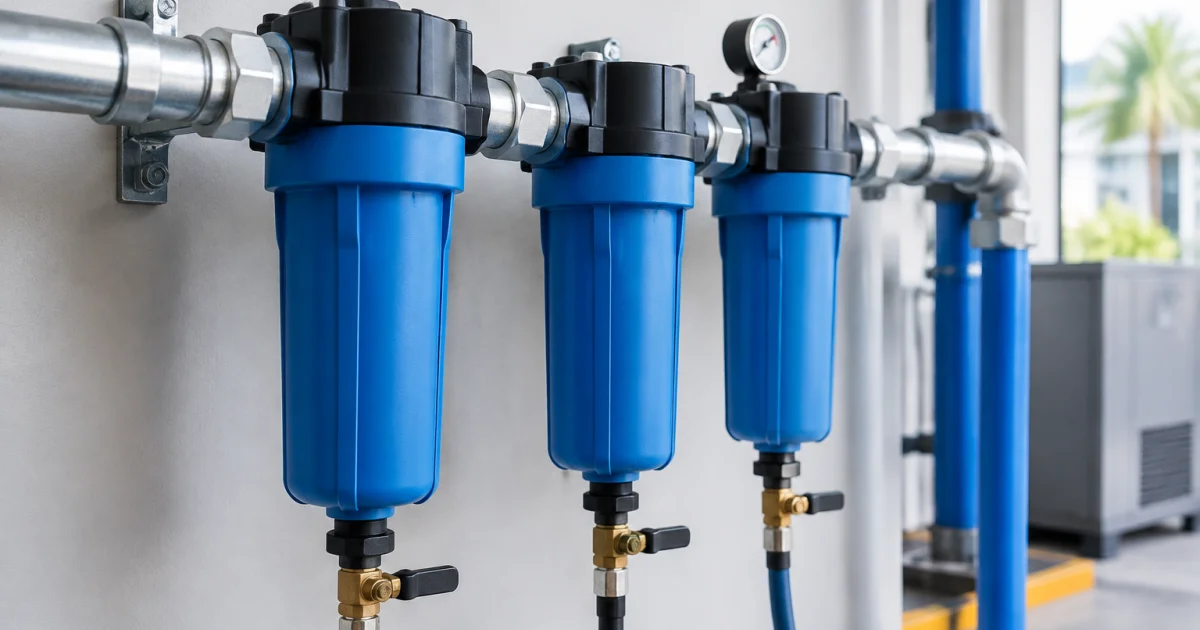

How to Choose the Right Compressed Air Filter Grade for Your Application in Penang
Choosing a compressed air filter grade can look straightforward—until the wrong choice causes paint defects, sticking pneumatic valves, instrument failures, or chronic pressure drop that makes the compressor work harder. In Penang’s warm, humid conditions, filtration and drying must be planned together.
This tutorial is for procurement and maintenance teams who want to shortlist filter grades before engaging a supplier. If you’re comparing options for a Compressed Air Filter Penang installation, use the steps below to match filter performance to real contamination risks, specify sensible stages (not overkill), and avoid sizing and placement mistakes.
Step 1: Define “air quality” from your application backwards
Start at the point-of-use and work back to the compressor room. The tighter the application, the more important aerosols, sub-micron particles, and moisture control become.
- General plant air: cylinders, blow-off, air knives, non-critical tools. Focus on bulk water, rust/scale, and basic oil carryover control.
- Process-sensitive air: spray painting, CNC/precision pneumatic tools, packaging machinery, control valves, instrumentation. Fine aerosols and small particles can impact quality and uptime.
- Critical/clean air: laboratories and sensitive equipment where contamination affects tests or product outcomes. Typically needs high-efficiency coalescing filtration plus very dry air, often with point-of-use “polishing”.
Gather these details before discussing grades:
- Current symptoms: water at tools, rust in lines, sticking valves, clogged nozzles, product defects.
- Any paint booths, sensitive instruments, or oil-free requirements.
- Pressure drop tolerance (minimum pressure at end use).
- Long pipe runs/many drops (higher corrosion and scale risk).
This approach avoids a common mistake: installing the finest element everywhere, then paying for higher pressure drop, higher energy use, and frequent element changes without measurable benefit.
Step 2: Identify your contaminants (and what filters can’t solve alone)
Compressed air contamination usually falls into solids, water, and oil (liquid/aerosol/vapour). Filter grade selection is deciding what you’re removing at each stage—and what requires other equipment.
Solids: dust, rust, pipe scale
Solids come from intake air, compressor wear, and internal corrosion. Scale and rust can be persistent in older or frequently wet systems. Removing solids protects tools and prevents downstream fine elements from clogging early.
Water: bulk condensate vs water aerosol
- Bulk water/condensate: visible liquid in separators, receivers, and low points.
- Water aerosol: mist carried with airflow that can cause corrosion and defects.
Bulk water is best controlled with correct piping, separators, reliable drains, and an appropriately sized refrigerated dryer. Fine aerosols are handled by coalescing filtration after moisture removal.
Oil: carryover, aerosols, vapours
Oil-lubricated compressors can introduce oil aerosols; hydrocarbons can also enter from ambient air or from lubricated tools. Coalescing filters remove liquid/aerosol oil. If odour or vapour reduction is required, it’s typically handled by an activated carbon stage at point-of-use (confirm suitability and maintenance requirements with your supplier).
Important: Filters do not replace a dryer. In a wet system, fine coalescing elements can overload, spike differential pressure, and still allow moisture-related problems downstream. In many Penang sites, specify air treatment as a system: dryer + correct filter stages + drains.
Step 3: Build a practical filter train (stages) that matches risk
Most industrial setups use multiple stages rather than one “do-everything” filter. Brand names vary, but the functions below are consistent and easy to discuss with suppliers.
Stage A: Pre-filtration near the compressor room
Goal: Capture larger particles and protect downstream equipment (dryer and fine elements) from premature loading.
- Often used as a general-purpose particulate stage.
- Commonly installed as the first inline filter after the receiver or before the dryer (layout dependent).
When you need it: almost always—especially with older piping, visible rust, or maintenance debris.
Stage B: Refrigerated dryer + moisture management
Goal: Reduce moisture load so filtration remains stable and elements last longer.
In Penang, refrigerated dryers are commonly selected for general industrial needs. If you’re evaluating Compressed Air Dryer Penang options, treat the dryer as part of your filtration plan, not an add-on.
- Use appropriate separators and dependable automatic drains to remove condensate.
- Size for real flow, inlet temperature, and ambient conditions.
- Plan condensate handling; if oil is present, an oil-water separator may be required.
Stage C: Fine coalescing filtration for aerosols (oil/water mist)
Goal: Remove fine oil and water aerosols that impact tools, valves, painting, and instrumentation.
This stage typically performs best downstream of the dryer, where air is cooler and drier. Correct sizing and placement help control pressure drop and extend element life.
When you need it:
- Spray painting, finishing, and related compressed air supply.
- Precision pneumatic tools and automated production machinery.
- Instrument air (depending on your spec and risk).
Stage D: Point-of-use polishing (only where needed)
Goal: Deliver the cleanest air to the most sensitive points without penalising the entire plant.
Adding polishing filters near paint booths, labs, and critical equipment reduces system-wide pressure drop and concentrates maintenance where it matters. It also protects against contamination picked up in distribution piping after the main treatment station.
A simple decision table you can use in meetings
| Application area | Typical risks | Recommended approach |
|---|---|---|
| General plant tools & cylinders | Rust, water carryover, dirt | Pre-filter + dryer + general coalescing if issues persist |
| Automotive spraying / finishing | Oil/water aerosols, defects | Dryer + fine coalescing + point-of-use polishing |
| Instrumentation / control valves | Sticking, corrosion, unstable pressure | Stable dryer performance + fine filtration near headers and sensitive drops |
| Labs / sensitive equipment | Contamination of tests, equipment faults | Dedicated point-of-use filtration and tighter maintenance discipline |
Step 4: Size and place filters correctly to avoid pressure drop and “false savings”
Even the right grade can disappoint if it’s undersized, placed poorly, or exposed to unnecessary moisture/dirt. Use the checks below before finalising a purchase.
Check the real flow and duty cycle
Don’t rely only on compressor nameplate flow—plants add tools and machines over time. Confirm:
- Peak flow (shift changes, start-up surges, simultaneous tool use).
- Compressor discharge pressure vs minimum pressure required at end use.
- Allowance for expansion (especially for factories and workshops).
Undersized filters lead to chronic pressure drop, forcing higher compressor discharge pressure and increasing energy cost and wear.
Place drains and separators where water actually forms
Condensate forms as air cools—often after aftercoolers, receivers, dryer inlets, and long distribution runs. Ensure:
- Automatic drains are installed and maintained (a failed drain can flood downstream filters).
- Drain lines are routed correctly and not blocked.
- Condensate treatment is planned; if oil is present, use appropriate separation rather than discharging untreated condensate.
Use differential pressure (ΔP) as a maintenance signal
Element price matters, but ΔP drives operating cost and performance. In your specification, ask for:
- Expected pressure drop when new and the recommended change-out point (ΔP and/or hours).
- Local element availability and lead times.
- A maintenance schedule aligned with operating hours and contamination load.
Don’t forget the distribution piping condition
Corroded headers, dead legs, and poorly drained low points can keep reintroducing particles even with excellent compressor-room filtration. Sometimes targeted piping fixes or selective point-of-use particulate protection delivers more benefit than upgrading to a finer mainline grade.
Step 5: Shortlist filter grades with a supplier (what to prepare and what to ask)
Grade naming differs by brand, so selection is fastest when you provide site details and have the supplier map needs to element types and stages. Local support also helps verify layout, installation space, and serviceability.
Before requesting a proposal, prepare:
- Compressor type(s) and capacity (single vs multiple units).
- Operating pressure and any critical minimum end-use pressure.
- Dryer details (or confirm none) and observed moisture issues.
- Current filter stages/locations and any maintenance pain points.
- Most sensitive applications (paint, instruments, lab, healthcare-related equipment).
- Symptoms/complaints: oil smell, water carryover, rust, frequent regulator failures.
Questions to ask:
- Which stage is handling particles vs coalescing vs polishing?
- What is the expected pressure drop when new, and the change-out criterion?
- Where should filters sit relative to the receiver and dryer in our layout?
- Which departments need point-of-use protection (and why)?
- What routine weekly/monthly checks should maintenance perform?
If you’re standardising on a known filtration range, review options such as the Air Care Filter line and match it to the stages above. For higher-flow trunk lines, a dedicated Main Line Filter may suit the header, with point-of-use filtration added only where needed.
Practical checklist and common mistakes (quick wins for Penang sites)
- Quick win: Fix drains first—many “filter problems” are actually drain failures causing water carryover.
- Quick win: Place fine coalescing filters after the dryer in most layouts to reduce loading.
- Quick win: Use point-of-use polishing for paint booths/sensitive equipment instead of overspecifying the whole plant.
Common mistakes to avoid:
- Using a single ultra-fine stage: higher ΔP and maintenance, and it still won’t solve moisture without a dryer.
- Ignoring distribution piping: downstream corrosion can reintroduce particles after treatment.
- Undersizing to cut upfront cost: chronic pressure drop increases compressor load and reduces tool performance.
- No condensate plan: if oil is present, treatment (e.g., oil-water separation) may be required.
If you’re also reviewing temporary capacity during upgrades, Air Compressor Rental Penang: A Solution For Industrial Air Compressor Needs can help you plan maintenance windows while improving air treatment.
Conclusion: Choose filter grade as a system, not a catalogue item
The right compressed air filter grade protects your most sensitive applications without creating unnecessary pressure drop and plant-wide maintenance burden. Work backwards from end-use risk, separate particle control from aerosol removal into practical stages, and treat drying, drains, and piping condition as part of the same decision.
With compressor details, operating hours, pressure targets, and your cleanest-air departments, a local Penang supplier can recommend a staged setup and layout your team can maintain—delivering stable air quality without overspending.
Frequently Asked Questions
How do I choose between a particulate filter and a coalescing filter?
Use a particulate filter primarily for solid contaminants like dust, rust, and pipe scale. Use a coalescing filter when you need to remove fine liquid aerosols (oil and water mist). Many systems use both: particulate pre-filtration to protect a downstream coalescing stage.
Do I still need a dryer if I install finer compressed air filters?
Yes. Filters can capture droplets and aerosols, but they do not reliably reduce moisture the way an air dryer does. If the system is wet, fine elements can overload, increase pressure drop, and still allow corrosion and water-related issues at points-of-use.
Where should filter stages be installed in a typical industrial setup?
A common approach is pre-filtration near the compressor room, then a refrigerated dryer for moisture control, followed by fine coalescing filtration downstream of the dryer. Add point-of-use polishing filters only where the cleanest air is required (for example, spraying, instruments, or sensitive equipment). Final placement should be confirmed against your piping layout and available installation space.
What causes high pressure drop across compressed air filters?
High pressure drop is usually caused by undersized housings for the real flow, elements loading up with contaminants (especially when drains fail and water carries over), or placing fine coalescing filters in positions where they see heavy moisture or dirt. Monitoring differential pressure and maintaining drains are practical ways to prevent chronic pressure loss.
Can you supply Friulair dryers in Penang along with filters?
Pneu-Care Resources Sdn Bhd supplies compressed air treatment solutions including Friulair refrigerated air dryers and compressed air filters. If you are comparing an Air Dryers Supplier Penang option, share your compressor capacity, operating pressure, and moisture issues so the dryer and filter stages can be matched as one system.
Need help matching filter grades to your Penang application?
Pneu-Care Resources Sdn Bhd helps factories, workshops, labs, and process plants in Penang shortlist the right compressed air filter stages based on flow, pressure, operating hours, and end-use risk. We supply Air Care filtration solutions, Friulair refrigerated air dryers, BEKO oil-water separators, and provide technical consultation plus servicing support to keep your system reliable.
Share your compressor model, current air treatment layout, and the applications that need the cleanest air—our team will recommend a practical filter grade plan that balances air quality, pressure drop, and maintenance.