

Compressed Air Systems Trend 2026 in Penang: Why More Plants Are Switching to Variable Frequency Screw Compressors
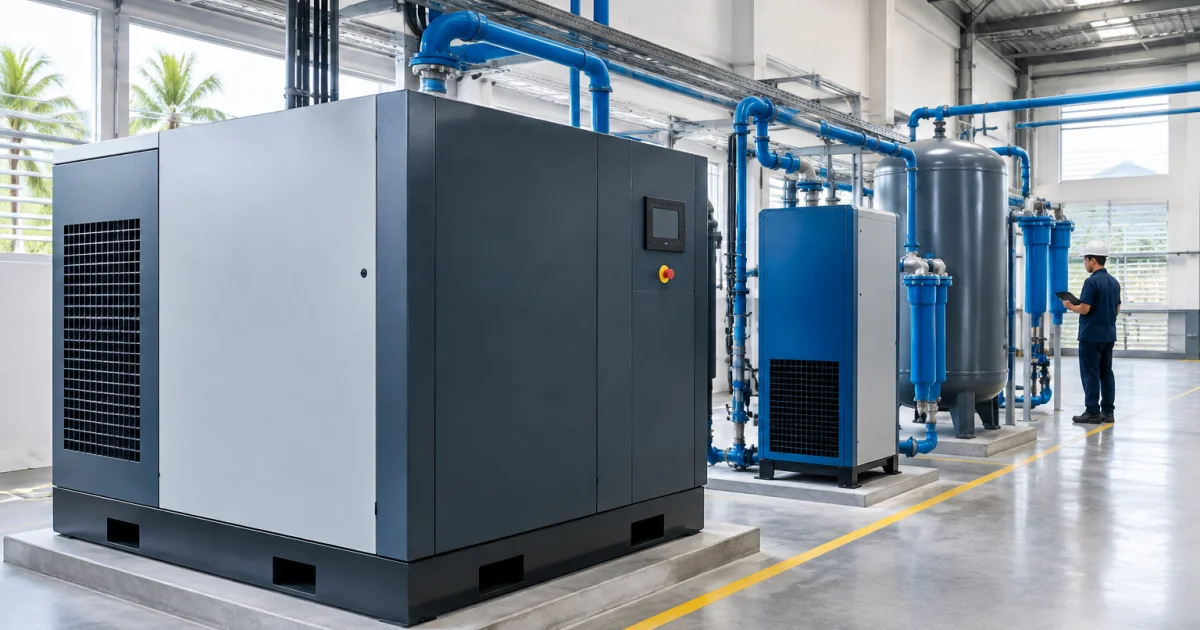
In Penang’s industrial zones, compressed air is increasingly treated as a controllable operating cost—not a fixed “utility.” As production volume shifts by product mix, shifts, and seasons, many plants are moving from fixed-speed screw compressors to variable frequency (inverter/VSD) models as a clear 2026 trend.
If you’re comparing options for Air Compressors Penang facilities, the decision is rarely about the compressor alone. Better results come from evaluating the full system: demand profile, pressure stability, air treatment (dryer + filtration), condensate handling, and maintenance support. This article explains what’s driving the shift, where VSD helps most, and what to verify before approving a replacement or expansion.
Why variable frequency screw compressors are gaining momentum in Penang
Fixed-speed screw compressors are most efficient near a narrow operating point, but factory air demand is rarely steady. Air use rises during tool operation, packaging, conveying, blow-off, and batch steps, then drops during breaks, changeovers, or low-demand shifts. Under fluctuating demand, fixed-speed machines often cycle load/unload—consuming power while delivering less useful air.
Variable frequency screw compressors reduce this mismatch by adjusting motor speed to follow demand. In practice, that usually delivers:
- Lower energy waste at partial load because the compressor doesn’t run at full speed when the plant isn’t using full flow.
- Tighter pressure control with smaller header swings.
- Smoother performance for pressure-sensitive processes (pneumatic valves, spray finishing, automated assembly).
This demand-matching approach fits many Penang plants that run multiple shifts, add lines over time, or share one compressed air network across departments.
Fixed-speed vs VSD: a practical explanation (not just theory)
Most buyers focus on two outcomes: reducing energy cost and improving reliability. VSD units can support both—but only when the application fits the demand pattern and the system is configured correctly.
1) What happens at partial load
Fixed-speed compressors commonly control airflow by unloading while the motor continues running, then reloading when pressure falls. These transitions can draw meaningful power without producing proportional air. A VSD compressor narrows that gap by slowing down as demand drops, holding pressure closer to setpoint with less cycling.
If your plant runs long hours at mid/low demand (smaller night shifts, batch processes with idle time), partial-load efficiency is often the main reason VSD makes the shortlist.
2) Pressure stability and downstream impact
Pressure stability affects quality and equipment performance. Dips can slow actuators or affect spray patterns; excess pressure increases consumption at open blow points and amplifies leak losses. With correct settings, a VSD compressor can hold a tighter pressure band and reduce the “turn pressure up to stop complaints” habit.
3) Starting current and operational smoothness
Inverter drives typically enable soft starting, reducing mechanical shock versus frequent across-the-line starts. This can help sites where compressors cycle often or where electrical stability is a concern.
The real decision: it’s a system upgrade, not a compressor swap
A VSD compressor can perform extremely well, but results suffer if the rest of the compressed air system is ignored. In Penang, many “compressor issues” are actually system issues: moisture, pressure drop, dirty filters, undersized headers, uncontrolled blow-off, or leaks. When evaluating an Industrial Air Compressor Penang upgrade, review the network end-to-end.
Air demand profile and the base-load / trim strategy
Not every plant should replace every compressor with VSD. A common strategy is a fixed-speed base-load unit (kept near its efficient range) paired with a VSD “trim” compressor to absorb demand swings. This reduces cycling and improves stability during peaks and valleys.
To choose the right approach, clarify:
- Typical vs peak flow demand (and when peaks occur)
- Required working pressure at critical points of use
- Operating hours per day and days per week
- Expansion plans (new lines, new tools, additional shifts)
If you don’t have logged data, start with a structured walk-through: identify major air users, map peak events, and list pressure-sensitive equipment. That is often enough to decide whether VSD should be the primary machine or the trim machine.
Dry air is part of the energy story
Moisture causes corrosion, sticking valves, defects, and unplanned maintenance. It also increases pressure drop and can damage tools and instruments, so air treatment is often part of the same CAPEX decision as the compressor.
A refrigerated dryer is a common choice for general manufacturing. Many buyers look for an Air Dryers Supplier Penang that can support sizing, installation, and service—not just deliver equipment. Dryer selection should consider:
- Real operating flow (not only nameplate)
- Ambient temperature in the compressor room
- Inlet air temperature after cooling
- Required pressure dew point for the process
For example, Friulair refrigerated air dryers are often specified where consistent moisture control is needed. Results depend on correct sizing, correct installation, and drains that work reliably.
Filtration and pressure drop: small parts, big impact
Filters protect equipment from particulates and oil aerosols, but they also create pressure drop when undersized, poorly selected, or left unchanged. Added pressure drop forces compressors to run at higher discharge pressure to achieve the same point-of-use pressure—reducing the efficiency gains you expected from a VSD upgrade.
When refreshing the system, include filtration selection and a maintenance plan. Many Penang plants use Air Care filtration in staged setups for general plant air, with higher-grade filtration where required. The goal is fit-for-purpose air quality with minimal restriction.
Useful related product reference: Air Care Filter.
Condensate and compliance-minded housekeeping
Compressed air produces condensate. Poor condensate management leads to slippery floors, corrosion, drain failures, and avoidable callouts—especially where oil carryover may be present.
An oil-water separator treats compressor condensate before disposal by separating oil from water. BEKO oil-water separator systems are commonly used for this purpose and are often included in compressor room upgrades focused on reliability and housekeeping. If your team is searching for “oil water separator penang,” it’s usually time to standardize condensate handling instead of relying on ad-hoc drains and containers.
How to evaluate ROI without guessing or overpromising
You don’t need a complex model to build a defensible business case, but you do need structured assumptions based on measurement or credible operating information.
Use this checklist to compare fixed-speed and VSD screw compressors:
- Load profile: Estimate hours at high, mid, and low load (even shift-based estimates help).
- Current pain points: Pressure complaints, moisture problems, frequent maintenance, or downtime risk that drives hidden cost.
- System pressure band: Identify the minimum pressure needed at the most critical end use, then assess whether better control and lower pressure drop allow a lower header setpoint.
- Air losses: Leakage and uncontrolled blow-off. If leak repair is planned, include it so you don’t oversize the next compressor.
- Support and service plan: Predictable preventive maintenance often matters more than headline efficiency numbers.
Common mistakes include oversizing “just in case” (locking the plant into inefficient low-load operation) and focusing only on compressor purchase while ignoring dryers, filters, and piping that determine point-of-use performance.
What to look for when specifying a VSD screw compressor package
When Penang plants request quotations, the most useful RFQs define not only flow and pressure, but also operating constraints that affect real performance. Use the points below so suppliers propose a package that matches your site.
1) Control philosophy and integration
Confirm how the controls maintain pressure stability, how the unit behaves at very low demand, and how it coordinates with existing compressors in parallel. If an older fixed-speed unit remains as base-load, coordination and setpoints must be defined to prevent machines “fighting” each other and wasting energy.
2) Air treatment included in the scope
Specify a package view: compressor + dryer + filters + drains. Splitting these into unrelated purchases increases the risk of mismatched capacity and avoidable pressure drop. Where air quality is critical, state required dew point and filtration grades.
3) Installation realities: room ventilation and layout
Compressor rooms are often hot and space-limited. Heat management affects compressor efficiency and dryer performance. Plan for service access and for piping routes that minimize pressure drop and allow future expansion.
4) Maintenance support and downtime protection
Assess the supplier’s ability to support inspections, troubleshooting, and preventive maintenance. Many plants also value contingency options such as rental or loan compressors during breakdowns or major service windows.
If temporary support matters for your risk profile, it’s worth reading: Air Compressor Rental Penang: A Solution For Industrial Air Compressor Needs.
Conclusion: why the 2026 shift matters for plant performance in Penang
The 2026 shift toward variable frequency screw compressors in Penang reflects a more disciplined approach to compressed air: matching supply to real demand, stabilizing pressure, and treating air quality as a reliability requirement. For many plants, VSD technology reduces part-load waste and improves day-to-day process stability—especially when paired with the right dryer, filtration, and condensate management.
Before switching, confirm your demand profile, minimum pressure needs, and the presence of leaks and pressure drops across the network. A well-specified package and a credible maintenance plan will usually outperform a “compressor-only” upgrade. If you want to validate sizing or benchmark options, work with a supplier that supports both equipment and after-sales service across the full compressed air system.
Useful next reads
- PA Series Screw Compressor (product category overview for screw compressor options)
- Repair Services (service support for troubleshooting and maintenance planning)
- Top Air Compressor Brands And Suppliers In Penang A Comprehensive Review (broader comparison guide for buyers)
Frequently Asked Questions
When does a variable frequency (VSD) screw compressor make the most sense?
A VSD screw compressor is usually most suitable when your air demand fluctuates significantly across shifts or processes, causing a fixed-speed compressor to spend long periods unloading or cycling. Plants with variable production schedules, multiple departments sharing one header, or pressure-sensitive operations often benefit from the tighter pressure control and improved part-load efficiency.
Can I run a VSD compressor together with an existing fixed-speed compressor?
Yes. Many plants use a base-load / trim setup: a fixed-speed unit (or multiple) runs steadily as base load, and a VSD unit trims the changing demand. The key is correct control coordination and setpoint strategy so the machines do not compete, short-cycle, or create unnecessary pressure swings.
How do I choose the right compressed air dryer for a VSD compressor system?
Size the dryer to the real operating flow and conditions, not only nameplate compressor capacity. Consider inlet air temperature, ambient conditions in the compressor room, and the dew point needed for your application. Working with an Air Dryers Supplier Penang that can advise on sizing, drains, and maintenance helps prevent moisture issues and avoidable pressure drop.
Why do filters matter when I’m upgrading to a more efficient compressor?
Filters protect your tools and processes, but clogged or undersized filters create pressure drop. Higher pressure drop forces the compressor to run at a higher discharge pressure to achieve the same point-of-use pressure, which can erode the efficiency gains from a VSD upgrade. A planned filtration setup (such as staged Air Care filters) plus a maintenance schedule helps keep air quality consistent while controlling restriction.
Do I need an oil-water separator for compressor condensate in an industrial plant?
Many industrial sites choose to install an oil-water separator as part of good condensate management, especially where oil carryover may be present. It improves housekeeping, reduces drain-related issues, and supports a more controlled approach to condensate handling. It’s often specified alongside dryers, filters, and reliable automatic drains during a compressor room upgrade.
Plan a VSD compressor upgrade with Pneu-Care Resources Sdn Bhd
If you’re evaluating variable frequency screw compressors for your Penang plant, Pneu-Care Resources Sdn Bhd can help you compare fixed-speed vs VSD options based on your demand profile, pressure requirements, and operating hours. We supply rotary screw compressors and inverter-based solutions, plus Friulair refrigerated air dryers, Air Care filters, and BEKO oil-water separators—supported by servicing, maintenance, and temporary rental or loan units to reduce downtime risk.
Share your current compressor model, pressure setpoints, and operating pattern, and we’ll recommend a practical compressed air system configuration that fits your application.